

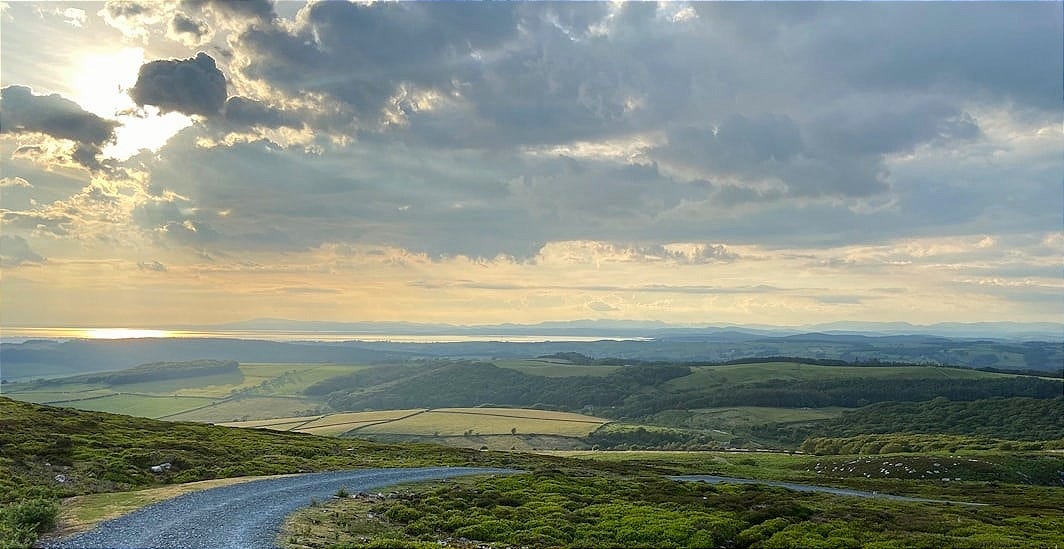
What if tourism wasn’t simply about attracting more visitors? What if it became one of the most powerful forces for restoring the landscapes people come to experience?
Few places are defined by their landscapes as strongly as Cumbria and Lancashire. From the fells of the Lake District to the shores of Morecambe Bay, through the Lune Valley and into the Forest of Bowland, these are places shaped by farming, nature, heritage and the communities that have evolved alongside them.
People don’t simply visit these landscapes.
They come because they represent something increasingly rare: beauty, connection, authenticity and a sense of place.
Yet that popularity brings an inevitable question.
How do we ensure that tourism doesn’t simply consume the very landscapes people come to enjoy?
For years, the answer has been sustainability. Reduce waste. Lower emissions. Protect habitats. Encourage responsible behaviour.
Those remain essential.
But I’m becoming increasingly interested in a different question.
What if tourism could actively leave a place better than it found it?
That is the promise of regenerative tourism.
The distinction may seem subtle, but it changes everything.
Instead of asking how tourism can minimise its impact, regenerative tourism asks how every visitor, every business and every investment can contribute to the long-term health of a place.
Health not only in environmental terms, but economically, socially and culturally.
That means thinking differently about what success looks like.
A successful visitor economy isn’t simply measured by occupancy rates or visitor numbers.
It’s measured by thriving farms, resilient local businesses, healthy ecosystems, meaningful employment, restored habitats and communities that feel stronger because tourism exists, not despite it.
Over the past year, these ideas have become much more than an interesting conversation.
I’ve found myself thinking about them almost every day because I’ve been asked to consult on Bowland’s Regenerative Tourism Plan.
One of the most exciting aspects of the work is asking what regenerative tourism actually means for a real landscape, with real farms, real businesses, real communities and real visitors.
The process is prompting wider conversations about how nature recovery, farming, biodiversity, local businesses, education and visitor experiences intersect within the same landscape. Not separate initiatives competing for attention, but one living landscape creating value in multiple ways.
That feels significant.
Because if it can happen in Bowland, there is no reason the same principles cannot connect with Morecambe Bay, the Lune Valley and eventually Cumbria itself.
After all, landscapes don’t recognise administrative boundaries.
Neither do ecosystems.
Nor, increasingly, do the challenges we face.
Perhaps the future of tourism lies not in promoting destinations as isolated attractions, but in understanding them as connected landscapes, each strengthening the next through shared learning, shared investment and shared stewardship.
Imagine arriving as a visitor and leaving knowing that your stay contributed to restoring peatlands, supporting local food producers, strengthening rural businesses, helping young people into meaningful work and investing in the long-term resilience of the landscape itself.
That is a very different proposition from simply booking a hotel. It creates a relationship with place rather than a transaction and for me, that is where regenerative tourism becomes truly interesting.
It stops being a tourism strategy.
It becomes a place strategy.
One that recognises that the future of our landscapes depends on the health of the relationships between farming, business, nature, education, investment and community.
Tourism is simply one part of that story.
But it could become one of its most powerful catalysts.
As conversations continue across Bowland, Morecambe Bay and Cumbria, I find myself increasingly convinced that regeneration won’t happen through a single project or organisation.
It will emerge because more people begin asking a different question.
Not how we can attract more visitors.
But how every visitor can leave our landscapes stronger than they found them.
That feels like a conversation whose time has come.